
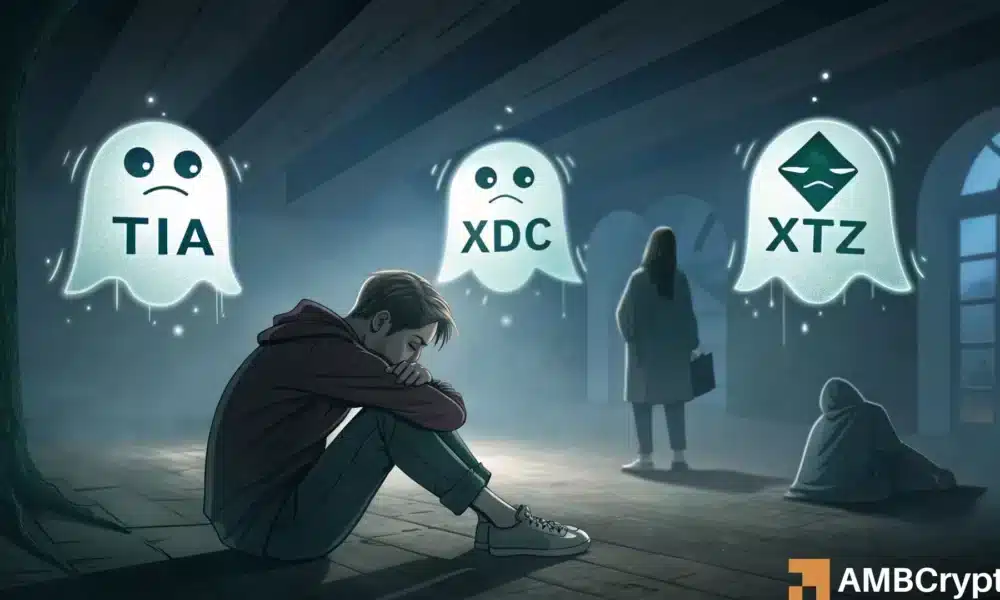
The blockchain boom has accelerated, driving a sharp rise in active networks. DefiLlama now tracks more than 500 chains, highlighting the scale of this growth.

While many new chains have launched, only a select few have achieved lasting success. Alchemy lists 64 such chains, each holding a significant market capitalization.
Among these chains, some have recorded substantial growth and dominate the market. On the other hand, others have experienced a near collapse in demand, with fewer users despite commanding a large market capitalization.
Chains with high market cap but low active users
Despite the blockchain boom, some chains have failed to live up to the promise and have continually declined.
For starters, while XDC Network saw its market capitalization plummet from $2 billion to $644 million, it remains among the top 100 cryptocurrencies.
Despite its high market capitalization, the network has experienced a significant decline in active users.

Source: Token terminal
The number of Daily Addresses declined by 84.38%, from 288k in 2021 to 45k. Active users have dropped to a low of 16k. As a result, its native token, XDC, declined by 62.5% on annualized charts.
Celestia is another chain that could be considered a ghost chain. Celestia has experienced significant weaknesses, particularly in adoption rates and overall market demand.
Celestia usage activity has declined steadily since 2024, when it peaked at 36k. In fact, the network Active Addresses dropped 96.92% from the 2023 peak of 39k to 1.2k at the time of writing.

Source: Token Terminal
Such a massive drop in active users suggested reduced demand and network participation.
As Active Addresses decline, this has had a direct impact on the native token, TIA. As such, TIA has declined 98.2% from its ATH and currently trades at approximately $0.35.
Tezos network sustainability at risk
Tezos has experienced a significant decline in network usage despite a market capitalization exceeding $400 million. Chain usage nearly collapsed, as evidenced by fee and revenue data.
According to Artemis data, Tezos fees and revenue declined by 68% over the past year. A drop in these two indicates reduced network activity and participation.

Source: Artemis
In the absence of actual demand, its native token, XTZ, fell 95% from its ATH and 47% over the past year, reflecting sustained weakness.
What the drop means for native tokens
Notably, a continued decline in the user base indicates weak demand for the respective chain tokens. As observed above, Celestia [TIA], Tezos [XTZ], and XDC Network [XDC] have all recorded massive losses during this period of weakness.
Therefore, if these chains continue to record poor usage, their respective tokens will also continue to dip. This shows the direct correlation between token prices and network usage.
At the same time, if demand for these networks rebounds, we could see the tokens regain their upside potential.
Final Thoughts
- The blockchain boom saw a surge in the number of chains, reaching 513 tracked chains, of which 64 were highly active.
- Despite the surge, some chains have become ghost chains, with low user activity and high market capitalization.